Competing for the first page of Google in English for terms such as hotel in Split is financially draining because this space is dominated by global giants with multimillion-dollar budgets. For small and midsize hotels, relying solely on English means handing profits directly to intermediaries and paying high commissions.
The solution to this problem is strategic multilingual SEO in tourism, which allows you to bypass the toughest competition and address guests in their native language.
Below, we explain why relying only on English is actually a financial trap, how translating your website into your guests’ languages brings you more direct bookings and why professional localization pays off very quickly.
Why Is Relying on English a Financial Trap for Hoteliers?
Relying solely on English forces you into direct competition with OTA platforms, or online travel agencies, which dominate search results. As a result, you lose organic traffic and pay high commissions to intermediaries for every booking.
The online booking market is highly centralized. According to data from the leading European association Hotrec Hospitality Europe, just three major platforms, Booking Holdings, Expedia Group and HRS, hold an incredible 92% market share among online intermediaries in Europe, with Booking.com alone dominating with a 68.4% share.
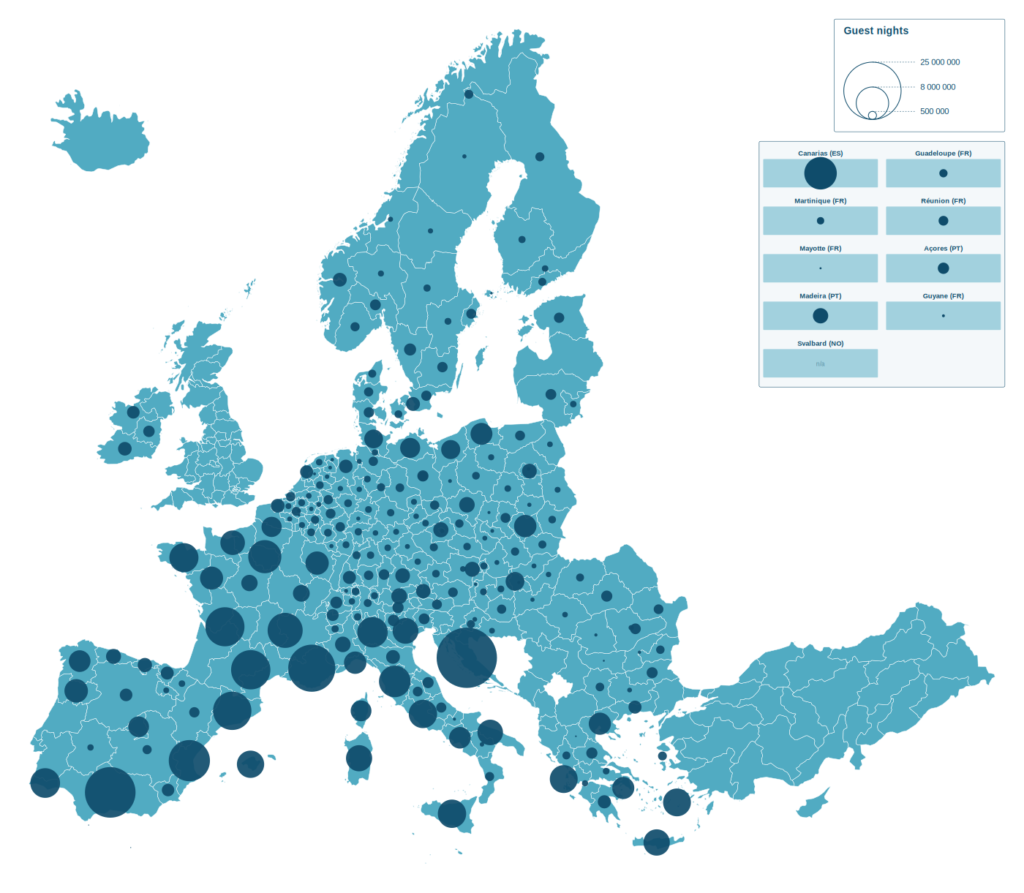
Eurostat data best illustrates just how dependent we are on intermediaries: with 27.7 million overnight stays in the summer season of 2025, Adriatic Croatia was the European record holder for bookings made through online platforms. This clearly shows that accommodation in Croatia is massively booked through third-party channels that charge high commissions, while hotels’ own websites and the opportunity for direct sales are used the least.
When you optimize your website only for English keywords, you are competing directly with these platforms. The result? A visitor clicks on their ad instead of your website and you pay commissions that typically range from 15% to 30%. With strict rate parity rules imposed by OTA platforms, your profit margin drops dramatically.
How Does Multilingual SEO in Tourism Increase Direct Bookings?
When you adapt your website so guests can find you while searching for accommodation in their own language, the results are much better. For example, it is much easier to rank first on Google when someone enters the Italian phrase albergo a Spalato than the English phrase hotel in Split because there is less competition. More importantly, when you address a guest directly in their native language, they gain trust, feel secure and are much more likely to make a booking instead of simply browsing.
Guests from Germany, Italy or Poland most often begin planning their vacation by searching in their own language. When you offer users content in their native language, you directly influence their mindset and behavior in the online environment.
Empirical research in the hotel industry shows that website personalization, adaptation to user needs and reduced perceived risk have a statistically significant positive impact on the intention to rebook accommodation.
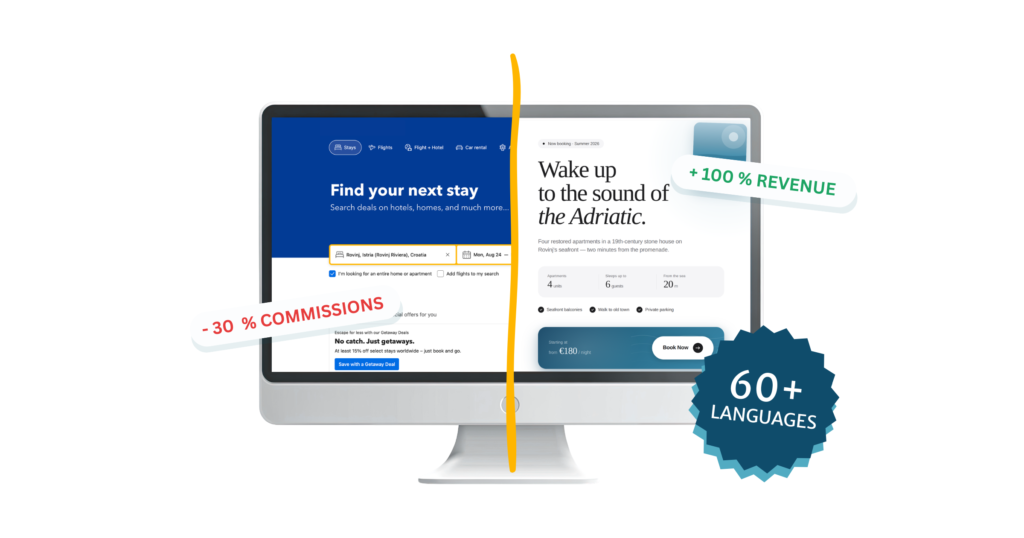
By enabling the booking process in the guest’s language, you dramatically reduce that perception of risk during online payment, which directly encourages a higher number of direct bookings for tourism offers.
Website Localization: Why Is Literal Translation Not Enough?
Literal translation does not work because tourists from different countries use different concepts and local terminology when searching. Successful website localization requires cultural, technical and linguistic adaptation to the real habits of the target market.
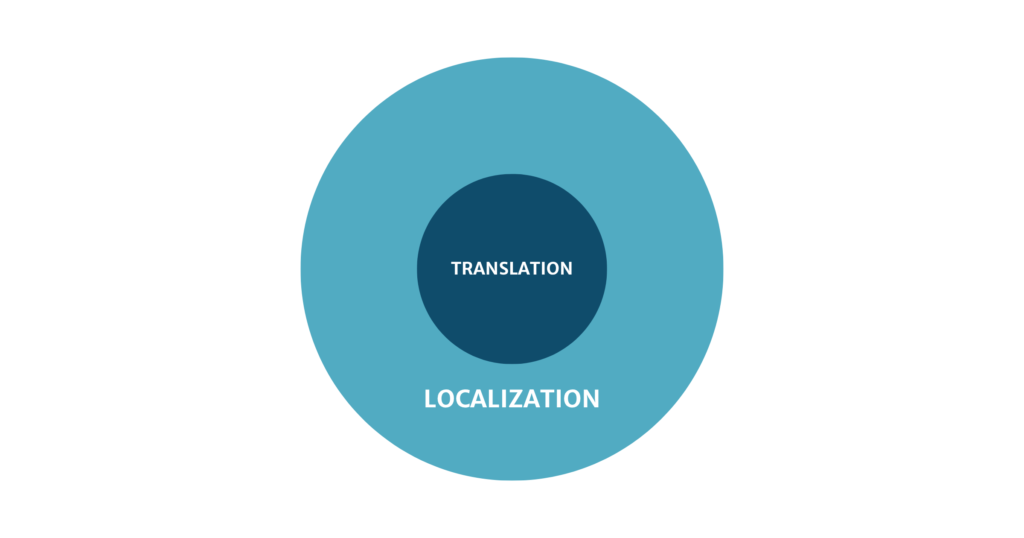
Localization is not just about translating words. It is the process of adapting products and content to meet specific cultural, regional and functional requirements. Literal translation can hurt sales because it ignores aspects such as:
- User interface (UI) adaptation: Certain languages, such as German, require significantly more text space, up to 35% more compared to English, which affects the design and layout of the booking engine.
- Cultural and technical specifics: Different markets use different date formats, such as DD/MM/YYYY vs. MM/DD/YYYY, decimal numbers, currency symbols and units of measurement.
- Search concepts: Foreign-language keyword research must be based on local context. Sinonim does not translate terms blindly, but instead researches real search habits, for example whether a German user searches for vacation home or Ferienhaus mit beheiztem Pool.
The Real Impact of Language Adaptation on Profitability and Loyalty
Scientific research confirms that communication in the guest’s native language directly affects guest satisfaction and online ratings. Guests from certain language backgrounds strongly penalize hotels that fail to provide an adequate language experience.
The case study Cultural differences, language attitudes and tourist satisfaction, conducted on a sample of more than 48,000 online reviews by foreign tourists, analyzed in detail how cultural differences and language expectations affect final ratings and service satisfaction in the hotel industry.
The results clearly showed that language experiences are significantly more important to tourists who emphasize the role of their native language, such as Italians and French guests, compared with those who are more open to using English as a lingua franca, such as Germans.
When guests from Italy and France were offered communication, including digital interaction, in their own language, they were more likely to leave significantly higher ratings and positive reviews.
On the other hand, a poor language experience had the strongest effect precisely on lowering their overall hotel rating. For hoteliers, this means only one thing: quality localization is not a cost, but an investment that protects online reputation and builds long-term loyalty.
Increase direct bookings and profit
Relying solely on English means leaving money on the table and handing direct bookings over to OTA platforms. Without a multilingual strategy, your potential guests will end up on intermediary portals, and you will pay a high commission for that privilege.
Do you want to take control of your bookings and increase your profit?
With professional website localization and in-depth keyword research in your key source markets, we will help you dominate where your guests feel safest – in their own language.
Multilingual SEO in tourism is the strategic process of optimizing a hotel or travel agency website for search engines in foreign languages. The goal is to rank highly for searches in the native languages of target guests in order to attract direct organic traffic.
Translation is the conversion of text from the source language into the target language. Localization is a much broader process that, in addition to translation itself, includes full adaptation to the cultural norms, currency and date formats and technical requirements of the target market.
Because terms are not translated literally. Research ensures that content is optimized according to real local terminology and the search habits of guests from different countries, resulting in a higher conversion rate.