You’ve invested heavily in expanding into a foreign market, translated your website and launched ads, but your conversion rate still isn’t improving. The main reason is often that your content has been translated literally, without accounting for the new market’s culture or user experience expectations. Successful website localization goes beyond translating words and serves as a strategic tool for building trust.
In this blog post, we share findings from the latest research and explain why literal translation doesn’t drive sales and which tactics used by global leaders you can put into practice today.
How Does Website Localization Affect the B2B Sales Cycle?
Website localization directly accelerates the sales cycle by allowing B2B buyers to conduct their own research in their native language. Buyers make purchasing decisions faster when a supplier communicates in a way that reflects their specific cultural and professional context.
In the B2B sector, buyers rely heavily on digital channels and their own assessments of suppliers. According to Gartner’s research, 37% of buyers interact directly with a supplier’s website when making a purchasing decision. Another 36% use the supplier’s social media channels. Furthermore, 35% search for company information online, and 30% read the supplier’s blog posts.
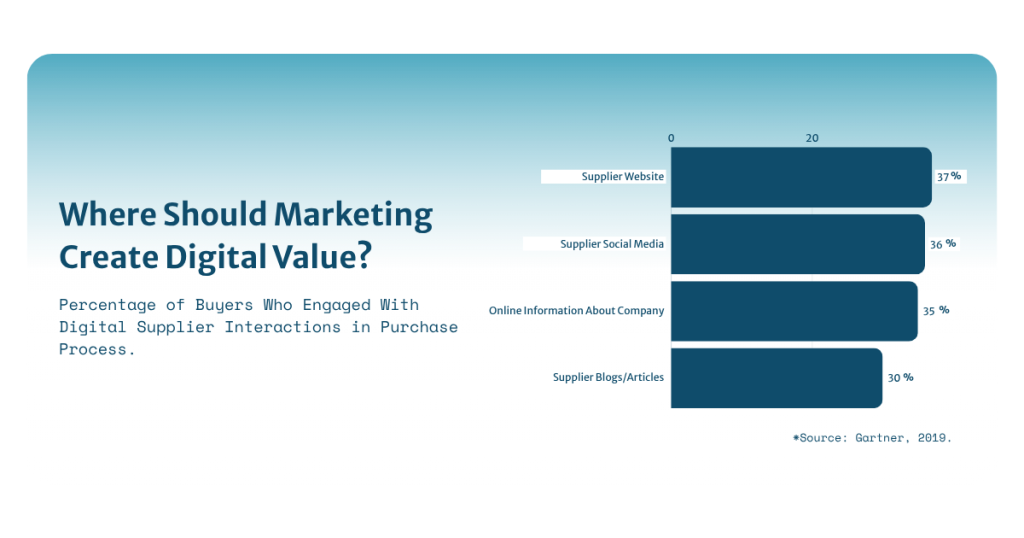
These findings clearly show that first impressions are formed exclusively through online content. Suppose you are expanding into the German or Italian market, but your website, blog, or technical documentation reads like an awkward translation. In this case, potential clients will rule you out during their initial online research, long before contacting you directly.
Why Isn’t Website Translation Enough to Drive Conversions?
Relying solely on translation often leads to abandoned shopping carts. Customers in foreign markets expect a localized experience in which currencies, payment methods and the user interface are fully tailored to their habits. Adapting the entire customer journey to local standards directly builds trust and increases sales.
Data from analytics platforms such as Adyen shows that the absence of preferred local payment methods directly lowers conversion rates. However, the problem goes beyond the checkout itself. According to recent research by Lokalise, as many as 36% of consumers have chosen not to buy from a brand that seemed poorly adapted to their country, language or culture.
On the other hand, 47% of consumers say they are more likely to buy from a brand that is well localized. Investing in multilingual marketing only pays off when your website inspires enough confidence for customers in foreign markets to complete their purchases.
3 Lessons From Global Brands
A survey by Lokalise of 1,000 consumers across eight countries revealed striking differences in the approaches of leading global brands. Here’s what B2B companies and e-commerce brands can learn from their strategies:
- Adapt Your Offering to Local Tastes (Example: McDonald’s): McDonald’s ranked first globally for localization in the study. Its success is rooted not just in website translation but in adapting the product itself to local culture – offering the McBaguette in France or the Maharaja Mac in India. Localization means understanding what a market naturally prefers.
- Language Isn’t Enough Without Cultural Context (Example: Apple): Despite the high quality of its content translations, Apple ranked last for cultural relevance among British consumers. The US and UK share the English language. However, Apple’s California-based marketing tone and creative direction failed to resonate with the British style of communication. This shows that simply transferring the same messaging across markets doesn’t work, even when there is no actual language barrier.
- Invest in Authentic Content (Example: Netflix): Netflix achieves excellent localization results by investing in original content created for specific markets, such as the series “Lupin” in France. This content reaches global audiences while feeling completely authentic in its home market.
Comparison: Basic Translation vs. Full Localization
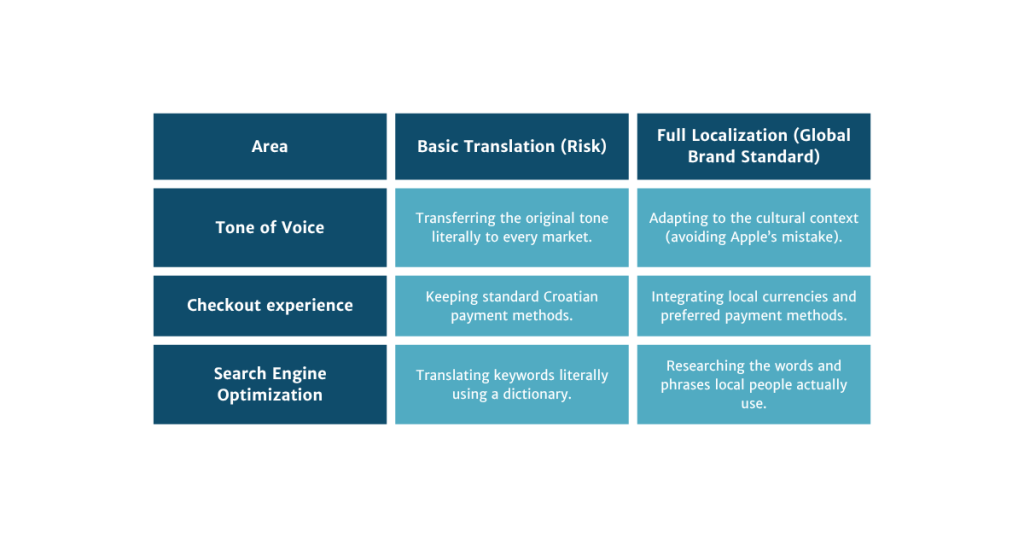
These examples from global brands show that effective localization removes barriers to sales. When you offer content tailored to your customers’ culture and habits, you build the trust that is essential to purchasing decisions in a foreign market.