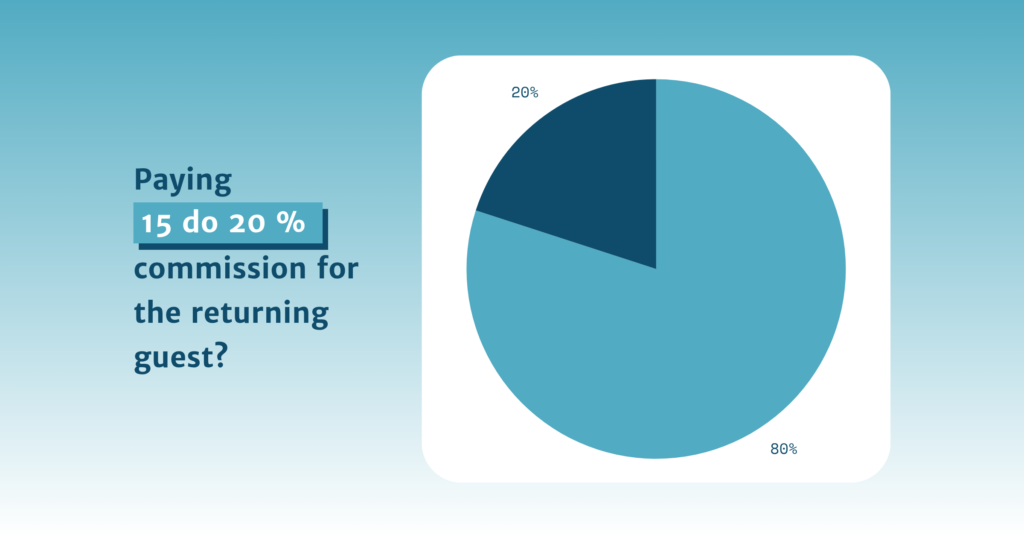
The end of summer brings hotels a welcome breather, but also a wave of check-outs at reception. Most hotels say goodbye to departing guests and hope they will find them again next year through platforms such as Booking.com or Expedia. However, this approach means paying a high OTA commission of 15% to 20% to acquire the same returning guest all over again.
Many hotel directors and marketing managers believe email marketing is a waste of time. Usually because they see these messages as boring or purely promotional. Despite the dominance of social media, email marketing is far from outdated. It remains a key part of hotel sales and brand building. In fact, hotel newsletters are among the most overlooked communication channels. And that is why they hold enormous, untapped potential for generating direct bookings.
The Economics of Direct Bookings and Why Campaigns Fail
The hotel accommodation market has become extremely competitive, while the cost of acquiring a new guest continues to rise. According to industry data, attracting a completely new guest costs five to seven times more than retaining an existing one.
At the end of the season, your list of email addresses belonging to guests who have already stayed at your hotel and were satisfied with the service is one of your most valuable digital assets. The problem is that many hotels do not know how to manage this channel in a way that is sustainable for their team in the long term. Without a clear strategy, the entire effort often comes down to sending one email before the season begins and another when only a few rooms remain available. For your strategy to succeed, your hotel newsletter cannot focus solely on aggressive sales. It must provide genuine value and information your guests actually want to read.
Segmenting Your Hotel Database: The “Top Three Languages” Rule
One of the fundamental rules we follow, and one that has proven successful, is never to send newsletters using a one-size-fits-all approach. Sending a single mass email in English to your entire contact database results in low open rates and high unsubscribe rates.
The first and most important step is to segment guests by country and language. Analyze the data in your system and identify the countries that account for the largest share of your guests.
Choose at least the three most commonly spoken languages, such as German, Italian and Czech. Your goal should be to ensure that the largest possible percentage of your database receives the hotel newsletter in their native language, with English used only as a fallback option for smaller markets. A multilingual approach removes communication barriers and creates a sense of genuine care and connection. The aim is for guests to experience the same level of hospitality in their inbox that they received at your reception desk.
How to Create a Hotel Newsletter That Generates Bookings
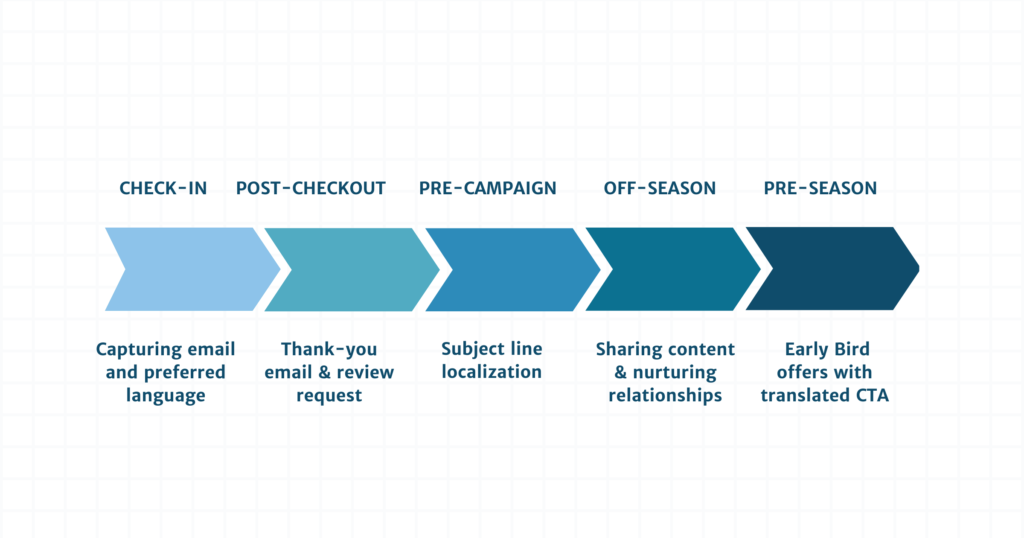
A good hotel newsletter does not need to be long, but it absolutely must have a clear purpose. Instead of sending random emails, create a carefully planned and automated sequence, or drip campaign, in the native languages of your key guest groups:
- Step 1: Collect data intelligently at reception during the season: The foundation is the proper collection of email addresses in full compliance with GDPR consent requirements. When entering an email address into the system, immediately record the guest’s preferred language so you can later automate the delivery of the correct language version.
- Step 2: Send a thank-you email and request a review within 24 hours of checkout: The first automated email should be sent immediately after the guest checks out. Thank them for their stay in their native language and ask them to leave a review on platforms such as TripAdvisor or Google while the experience is still fresh in their mind.
- Step 3: Localize the email subject line: The subject line is what convinces recipients to open the email. A literal translation often sounds awkward and unnatural. Your newsletter translation should therefore include cultural adaptation of the subject line, using phrases and expressions that feel familiar to the reader and help increase the open rate.
- Step 4: Provide value instead of selling during the winter: You should continue sending newsletters outside the main season, but they should not be filled with sales messages. Share useful local tips, recipes from your chef, stories about the destination or announcements of major events taking place near the hotel. Properly translated, engaging content keeps your hotel in the guest’s mind and gradually prepares them for the next season.
- Step 5: Use clear, translated calls to action: When sending an early bird offer in January, the button leading to the booking system must communicate a clear action in the guest’s language, such as Jetzt buchen instead of the generic Book now. More importantly, the button must lead to a hotel website that is also fully translated and localized in the same language.
Three Autumn Newsletter Ideas That Provide Real Value
The end of summer and the early autumn months are an ideal time to send newsletters, but an important strategic distinction needs to be made. Promoting shoulder-season stays is generally an excellent marketing strategy, as international tourists are increasingly visiting the Croatian coast during the autumn months. However, the ideas below are intended specifically for your previous guests, particularly those who stayed with you during the summer that has just ended.
Because they have only recently returned from their summer holiday at your hotel, it is too early to immediately try to sell them another autumn stay. Instead, your goal in September, October or November should be to help them ease back into their everyday routine, provide genuine value and maintain the emotional connection they formed with your hotel.
Here are three types of content this summer’s guests will actually want to read after returning home:
1. Keep summer alive in your kitchen: An exclusive recipe from your chef
- Content: Share a simple recipe for your most popular summer dish, a light dessert or a signature cocktail from your hotel restaurant.
- Why it works: Returning from a holiday to the daily work routine can be stressful. When you send guests the exact recipe for a dish they enjoyed on your terrace on a rainy day in October, you give them an instant escape. With an accurate translation of the ingredients into the guest’s native language, the flavors of your hotel enter their home and ease the stress of returning to work.
2. Discover the destination without the crowds: An insider’s autumn guide
- Content: Show guests what your destination looks like after the summer crowds have left and temperatures begin to fall. Describe the local grape or olive harvest, recommend autumn cycling routes or share photographs of quiet beaches and streets.
- Why it works: Guests do not form an emotional connection only with a comfortable bed. They also connect with the destination. Through authentic storytelling in their own language, you show them that the area remains alive beyond the peak season. Although you are not actively selling them an autumn stay, you are subtly educating them and encouraging them to consider visiting during the preseason or shoulder season in the future, when there are fewer crowds.
3. Hold on to that post-holiday calm: Tips from your spa team
- Content: Send short, professional tips from your spa therapists on dealing with autumn fatigue. These could include simple breathing techniques for reducing stress at the office, recommendations for essential oils or advice on caring for skin after summer sun exposure.
- Why it works: This type of content provides immediate and meaningful value. You are not selling an overnight stay. You are giving guests a small moment of peace for free. This positions your staff as trusted professionals who continue to care about the guest months after they have checked out.
Language Is Your Most Powerful Tool for Building Guest Loyalty
Advanced marketing tools, automation and modern software lose their purpose when the message arriving in the guest’s inbox feels cold, generic and unnatural. Guests do not choose hotels solely because of the bed or location. They choose them because of the overall experience, and that same level of service must remain visible in your digital communication for months after they check out.
When you address guests in their native language and offer authentic stories and genuine value without the pressure of aggressive selling, you are not simply building an email contact list. You are building long-term trust and a community of loyal visitors who, when planning their next holiday, will bypass intermediaries and competitors and book directly through your website or newsletter!
A high-quality hotel newsletter requires far more than translation alone. It requires a smart strategy, attractive design and flawless technical execution. At Sinonim, we manage the entire email campaign process on your behalf, from developing the concept and writing the copy to visual design and professional localization into your guests’ native languages.
Contact us today and leave your email marketing to professionals who will help turn this year’s visitors into loyal, returning guests.